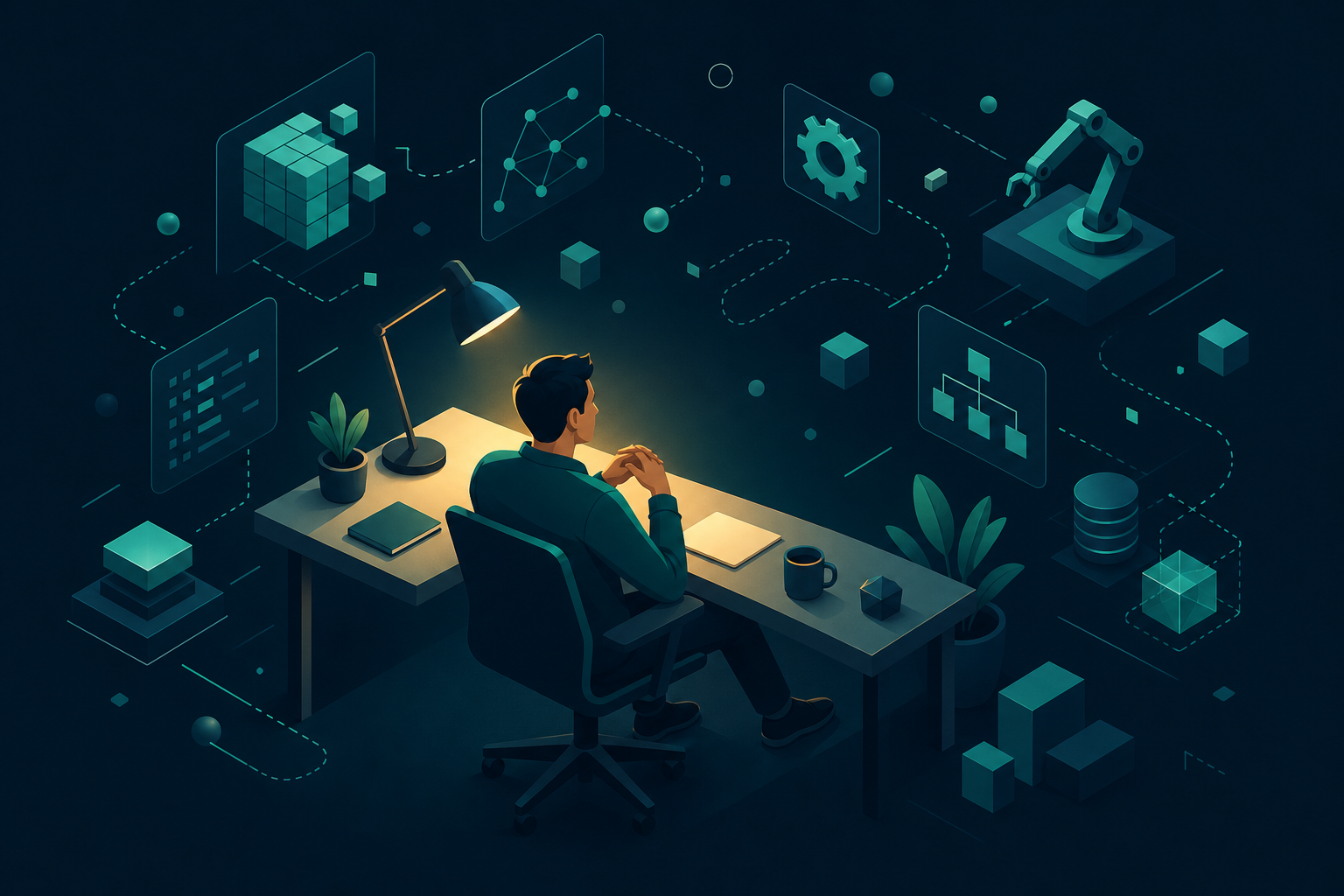
Think about the last hard call in your business. A price change. A tricky client. A hire that could go either way. No tool made that decision. A person did. That is the work only humans can do, and it is the work that moves a business forward.
Here is a number worth sitting with. McKinsey found in 2025 that 57% of work hours are now automatable with technology we already have. More than half the working week does not need a human at all.
Now look at it the other way round. If 57% can be handed off, the rest cannot. That other slice is the human work. It is judgement. It is trust. It is the conversation that only lands because a real person is having it.
Most businesses have this backwards. They keep their best people on the 57%, and squeeze the human work into whatever time is left.
So here is the shift. The goal of AI is not to make people do more. It is to give them back the hours the machine should have had all along.
That changes the question you ask. It stops being "what can we automate?" It becomes "what are our people actually for?"
Asked that way, the answer is easy. Your people are for the work a machine will never do well. The calls. The care. The judgement. The relationships that keep clients for years.
Picture your best account manager. She knows your top clients better than anyone. She can tell when one is about to leave before they say a word.
Now look at her Tuesday. She spends the morning copying numbers into a report. She spends the afternoon chasing updates in a spreadsheet. By the time she gets to her clients, she is tired and the day is nearly gone.
The report could build itself. The updates could sync on their own. None of that needs her. Her clients do.
That is the whole idea. The machine takes the copying. She gets her mornings back. And the work only she can do finally gets her best hours, not her leftover ones.
This is not a soft point about happier staff, though that tends to follow. It is about where your advantage comes from.
Two businesses can buy the same tools. They cannot buy the same people. Your team, doing the work only they can do, is the one thing a competitor cannot copy.
When that team is stuck on manual work, you are hiding your best asset. You are paying for judgement and getting data entry.
There is a quick test. Look at your best person's week. Then ask what share of it only they could do.
If most of their time goes on work someone, or something, else could handle, you have found the problem. Not a people problem. A design one. The talent is there. The hours are just going to the wrong place.
AI is not the hero here. Your people are. AI is just the thing that clears the desk so they can reach the work that counts.
So here is the one to sit with. If your best person had every one of their manual hours back, what would they do with them? Whatever the answer is, that is the work only humans can do. And right now, something is probably in the way.
Ready to see what AI transformation looks like for your business?
Take the AI Maturity Scorecard → link.flowstate.agency/widget/quiz/0G1v5TuWGWnZt8X55eFQ
Book an AI Discovery Call → link.flowstate.agency/widget/bookings/discovery-call-flowstate


.svg)





.webp)