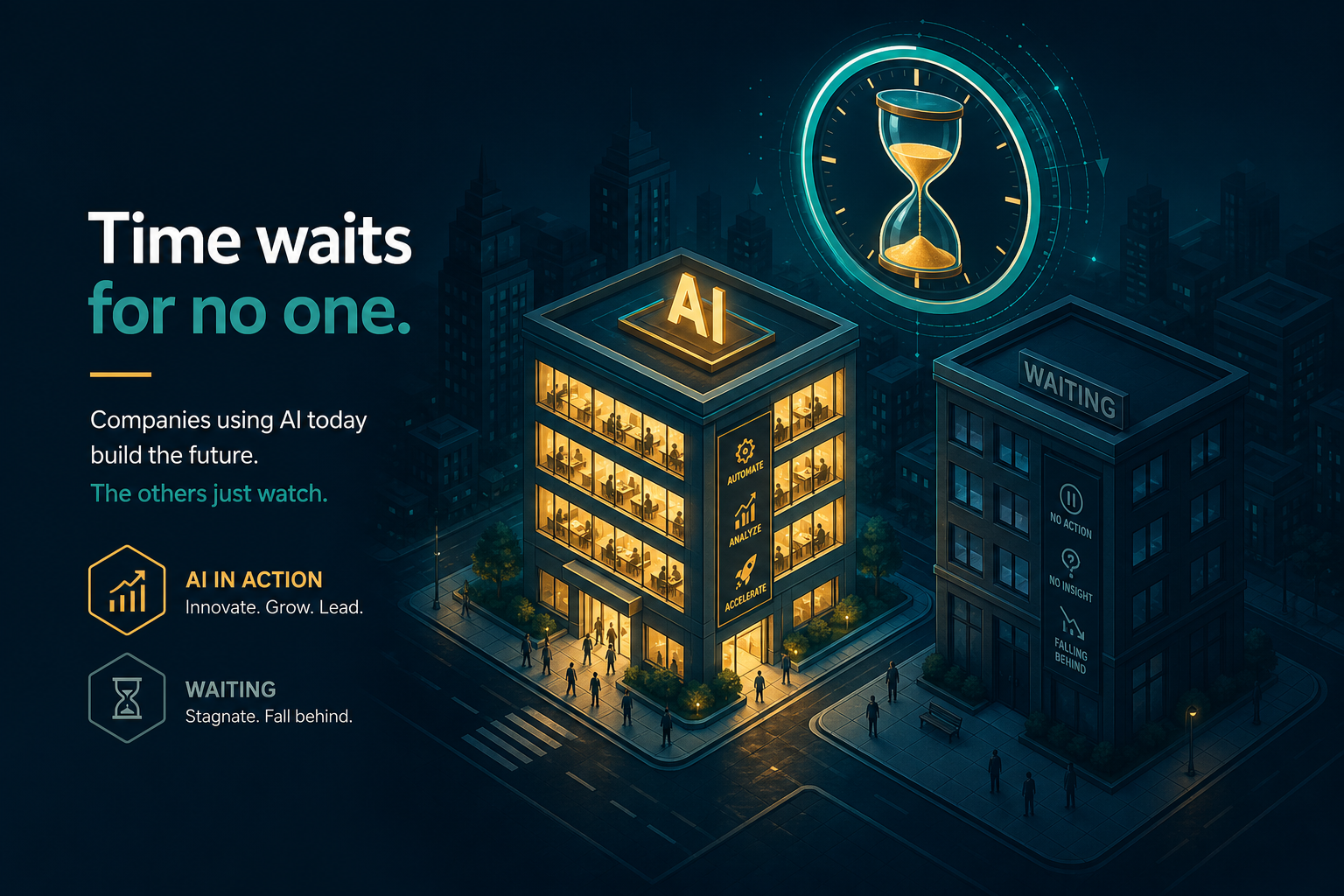
Waiting on AI feels like the safe choice. It is the riskiest one you can make.
Most leaders do not say no to AI. They say "not yet." Next quarter. After the busy season. Once things calm down. It sounds careful. It is not.
Here is a number worth sitting with. McKinsey found in 2025 that 57% of work hours are now automatable with technology we already have. More than half the working day.
Read that again. Over half the hours your team spends could be handled a different way, today. Not in some far-off future. Now.
So every week you wait, that cost keeps running. Your best people keep doing work a machine could do. You just do not see it on any invoice.
Here is the reframe. Waiting is not the absence of a decision. It is a decision. You are choosing to keep paying the old cost for a little longer.
Leaders often treat "not yet" as neutral. As if nothing happens while they wait. But something does happen. The busywork keeps eating hours. The team stays buried. The gap between you and the businesses that moved gets wider.
Doing nothing is still a choice. And it has a price.
Picture a founder I could describe from almost any week. He knows AI matters. He has read the articles. He plans to look into it properly once the quarter ends.
Meanwhile his best operations person spends eleven hours a week building reports by hand. Copying numbers. Chasing updates. Formatting slides nobody reads twice.
That is not eleven hours saved for later. That is eleven hours gone, every week, while he waits for a better time. The better time never comes. The work just piles up.
Most leaders picture the risk of acting. What if the tool fails? What if the team resists? What if we pick the wrong thing?
Those are real questions. But they miss the bigger one. The larger risk is standing still while your strongest people stay stuck on work that wastes them.
A competitor does not need to be smarter than you. They just need to free their people first. When they do, they move faster with the same team you have.
Waiting is comfortable. It asks nothing of you today. There is no change to manage, no habit to break, no awkward first month.
But comfort is not the same as safety. The comfortable path here is the one that quietly costs you the most. Every calm week of "not yet" is a week your team does not get back.
That is the part that stings. The cost of waiting does not arrive as a crisis. It arrives as a slow leak. Hours, week after week, that you will never recover.
Acting does not mean a giant project. It does not mean replacing anyone. It means looking honestly at one week of one person's time.
Find the work a machine could do. Hand it over. Give the human hours back to the human. That is a small step, and it beats another quarter of waiting.
You do not need to be a technology expert to make that choice. You just need to stop treating "not yet" as free.
So here is the one to sit with. If waiting has a cost, and it does, how many more weeks can your best people afford to lose?
Ready to see what AI transformation looks like for your business?


.svg)





.webp)